Samhain Shadow Work: Pulling Cards in the Dark Without Losing Your Mind
You are sitting cross-legged on your living room rug at 11:42 PM. The floorboards are freezing. Outside, dry oak leaves scrape against the window glass with a sound like fingernails on parchment. You brewed a cup of mugwort tea twenty minutes ago, but it tastes like warm lawn clippings, so it sits untouched beside a half-burned beeswax candle.
Samhain is here. The veil is thin, or so everyone on the internet keeps screaming at you in all-caps. You know you ought to be doing deep, transformative introspection. Instead, you are staring at a clump of dust under the radiator and wondering why you still get angry about a comment your sister made at Thanksgiving three years ago.
That is shadow work in late October. It is rarely a dramatic, glowing ritual with floating purple orb energy. Mostly, it is just you, your cluttered brain, and the uncomfortable realization that you have been holding onto emotional trash way past the expiration date.
The Need for a Grounded Physical Anchor
When you start poking around in your personal dark corners, things get slippery. Your brain wants to run. It tells you to open a social media app, check if your ex posted a story, or go scrub the kitchen sink at midnight. Anything to avoid looking at the Five of Cups sitting on your carpet.
Abstract thoughts float away. To do real work when the weather turns cold, you need something solid. You need physical weight in your hands.
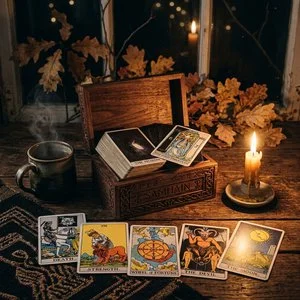
Cardboard tuck boxes tear at the corners after three months. They spill cards into the bottom of your tote bag, bending the edges of the High Priestess until she looks like a discarded receipt. That is why keeping your tools inside a sturdy, handcrafted engraved tarot box changes the tone of your practice. The heavy wooden lid opens with a clean, solid sound. It acts as a boundary. Inside the box, the deck rests; outside the box, the noise of your day stays put.
When you pull out a traditional 78-card deck from a dense wooden tarot box, your brain gets the signal. The chatter stops. You are not browsing; you are sitting down for a specific, focused purpose.
Spread 1: The Samhain Compost Pile
Autumn does not ask leaves for permission before dropping them. Trees simply dump what they cannot feed through January. Humans, however, love clinging to dead branches until our fingers cramp.
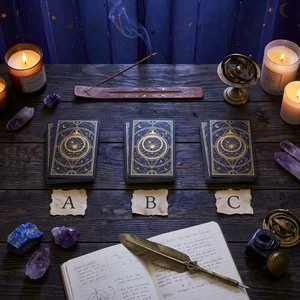
Shuffle your deck until your hands get warm. Lay out three cards in a straight horizontal line.
- Card 1: The Dead Leaf. What habit, grudge, or expectation is already dead, even if you keep watering it?
- Card 2: The Rot. How is holding onto this specific thing souring your current day-to-day mood?
- Card 3: The Black Soil. What nutrient or lesson stays behind once you finally drop this mess?
Suppose you pull the Eight of Cups for Position 1. Stop rationalizing. The card is telling you that the party ended two hours ago and you are still standing by the cold snack table. Put your coat on and walk out. The dark half of the year requires slim baggage.
Spread 2: Sweeping Out the Skeletons
Shadow work gets a bad reputation for being relentlessly bleak. It does not have to be a tear-fest. Sometimes your shadow is just an embarrassing fear that needs a quick laugh to lose its power.
Clear your surface. Pull four cards, placing them in a square pattern starting from the top left.
Position One shows the monster under your bed—the petty fear you refuse to admit out loud. Position Two shows why that monster is actually three feet tall and wearing a ridiculous hat. Position Three reveals the secret strength you act like you do not possess. Position Four gives you a clear, mundane action step for tomorrow morning.
Keep the interpretation blunt. If the card shows someone holding ten heavy sticks, stop taking on extra shifts at work just because you hate saying no. It is not cosmic mystery; it is basic math.
Spread 3: Pagan Winter Guidance
Winter in the northern hemisphere is long, grey, and quiet. Long before thermostats and electric heating, early European communities spent these months indoors, repairing tools, mending coats, and telling long stories by firelight. Pagan winter guidance centers on preservation rather than rapid expansion.
Use this five-card fan spread to map your internal winter quarters:
- Card 1: The Hearth Fire. What internal core truth must you keep warm at all costs over the next four months?
- Card 2: The Storehouse. What skills, relationships, or mental resources do you already have banked to get you through hard days?
- Card 3: The Cold Draft. Where are you leaking your energy through unnecessary drama or poor boundaries?
- Card 4: The Snow Drift. What area of your life is meant to sit completely dormant right now? (Hint: Stop forcing growth here).
- Card 5: The First Green Shoot. What quiet project should you gently incubate in the dark until spring arrives?
This layout gives you an operational manual for cold weather. When the world tells you to push, grind, and launch new initiatives in January, you can look at Card 4 and comfortably choose to nap instead.
Closing the Circle and Storing Your Tools
Once you finish reading, do not leave your cards strewn across the bed. Shadow work opens up old thoughts, and leaving the cards out leaves those channels buzzing in your sleeping space.
Gather your 78-card traditional tarot deck. Tap the stack three times on your wooden table to clear the lingering focus. Place them back inside your tarot storage box. As the lid settles onto the carved lip of the wooden tarot box, the session closes. The shadow stays on the paper; you go make yourself a proper toast or a real cup of black tea.
Having a complete tarot deck with wooden box means your ritual has a clean beginning and an equally clean end. You do not carry the spooky vibe into your teeth-brushing routine. The wood holds the work until you are ready to open it again.
What if I pull scary or intense cards right before I go to sleep?
Turn them over and put the deck away. Cards like the Tower, the Ten of Swords, or Death simply mark structural shifts or necessary endings, but if seeing them at midnight amps up your anxiety, close the reading immediately. Put the deck back in your tarot storage box, drink some ice water, and re-examine the pull in bright morning sunlight with a clear head.
Do I really need a wooden box, or can I just use a velvet bag?
A velvet bag works fine for keeping dust off, but it offers zero structural protection against crushed corners, spilled drinks, or curious pets. A heavy, engraved tarot box creates a deliberate physical boundary for serious work, keeps the card edges crisp for years of heavy shuffling, and stays flat on your altar without rolling around.
Is shadow work during Samhain actually useful, or am I just picking at old wounds?
It is only useful if you walk away with a practical action step. If a reading leaves you feeling hopeless, spiraling, or stuck replaying old mistakes, stop reading immediately. Good shadow work identifies a specific pattern—like agreeing to plans you hate—so you can change your behavior tomorrow, not force you to wallow in bad memories for fun.